What Window Tint Darkness Is Legal in Alabama? What Hazel Green, AL Drivers Need to Know Before Tinting
Window tint can make driving around Hazel Green, AL, more comfortable, especially when afternoon sunlight pours through your windows during school pickups or trips toward Huntsville. Before choosing a shade, however, you need to understand which tint levels Alabama permits on your particular vehicle.
For most Alabama-registered passenger cars, side and rear windows must allow at least 32% of visible light through. SUVs and other qualifying multipurpose vehicles have different rules for windows behind the driver. Windshield coverage, reflectivity, and medical exemptions also require attention.
Understanding Alabama window tint law before booking helps Hazel Green, AL, drivers avoid paying for an installation that later needs to be changed. The right decision starts with your vehicle’s classification, the existing glass, and the performance you want from the film.
What Does Window Tint VLT Mean?
Visible light transmission, usually shortened to VLT, describes how much visible light passes through a window. A higher percentage means more light gets through, creating a lighter appearance. A lower percentage produces a darker result.
For example:
- 70% VLT allows approximately 70% of visible light through.
- 50% VLT lets about half the visible light pass.
- 30% VLT appears darker because it transmits less light.
- 20% VLT creates a substantially darker appearance.
VLT does not describe the percentage of heat rejected. A film labeled 30% does not automatically block 70% of solar heat. Darkness and heat performance are separate characteristics, so comparing shades alone will not tell you which product best addresses summer discomfort.
For everyday driving, consider visibility as well as appearance. A shade that looks appealing in a sunny parking lot may feel considerably darker when backing out of an unlit driveway.
Film Percentage and Finished Window Percentage Are Different
Your existing automotive glass already affects light transmission. Adding film reduces the amount passing through the completed window further.
As a simplified example, glass transmitting 80% of visible light combined with a 50% film produces approximately 40% overall transmission: 0.80 multiplied by 0.50 equals 0.40. The same glass with a 30% film lands near 24%, which falls below Alabama’s 32% standard for passenger car side windows.
The shade selector on the 12 Volt Techs Inc. ceramic tint page lists 5, 15, 20, 30, 50, and 70 percent options. Because the finished window is what counts, ask us which film percentages suit each window on your vehicle. Actual results require measurement, and choosing film solely by the number printed on its packaging can create problems.
Alabama Window Tint Limits for Sedans
According to the Alabama Law Enforcement Agency (ALEA), passenger cars and station wagons generally must meet these requirements:
- Side windows and the rear window must transmit at least 32% of light.
- Reflective material must not reflect more than 20% of light.
- Transparent windshield tint is limited to the upper six inches.
ALEA lists a 3% tolerance for light transmission. Treat that as a measurement allowance rather than a reason to deliberately choose a darker installation. Planning around the stated 32% standard provides a clearer starting point.
We apply the same 32% standard for sedans and compact cars, covering the front side windows, rear side windows, and rear windshield. For a Hazel Green, AL sedan owner, that means the rear doors do not automatically qualify for darker tint simply because passengers sit behind the driver.
Likewise, a neighbor’s dark rear windows are not evidence that the same setup is appropriate for your car. Their vehicle may belong to a different classification.
What Changes for SUVs, Trucks, and Other Multipurpose Vehicles?
Alabama treats multipurpose passenger and recreational vehicles differently from ordinary passenger cars. ALEA explains that their windshield and front-seat windows follow the same restrictions as passenger cars.
On windows behind the driver, darker tint is permitted as allowed by the vehicle’s manufacturer under federal law. Outside rearview mirrors are required on each side of the vehicle when that darker tint is installed. Importantly, the manufacturer determines the vehicle’s classification.
We describe the same split for larger vehicles such as SUVs and trucks. Front side windows still require 32% VLT, while the rear windows have more flexibility.
That distinction matters for families comparing a sedan with an SUV. The same shade may be appropriate on one vehicle’s rear windows while failing the requirements applicable to another.
Before requesting a matching appearance across all windows, ask the installer to identify which rules apply to your exact vehicle. Body styling, seating capacity, and what a vehicle is commonly called do not replace its manufacturer classification.
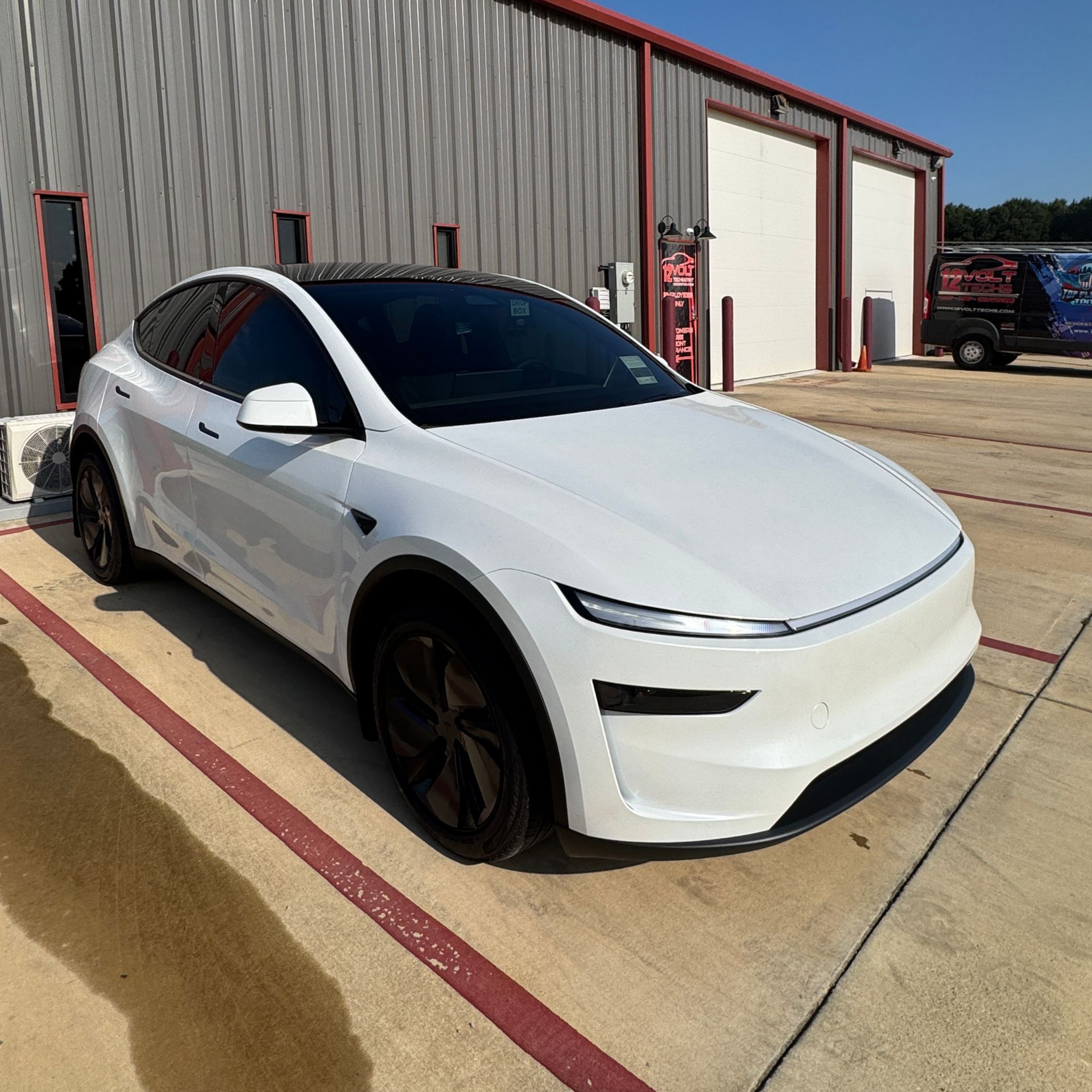
Does Factory Privacy Glass Change the Math?
Factory-darkened glass and aftermarket film are different. Factory glass already reduces light transmission before any film goes on, so adding film darkens the finished window further.
Tell us whether your vehicle has factory privacy glass, existing film, or an unknown installation from a previous owner. We need that information before recommending additional coverage. Matching the front windows visually to dark rear glass can be especially misleading. The front-seat windows remain subject to their own requirements, even when darker rear glass appears on the vehicle.
Can You Tint the Entire Windshield in Alabama?
Under the rules ALEA describes, only the upper six inches of the windshield may be tinted, and the material must be transparent. A lightly shaded film is not automatically lawful across the entire windshield simply because it looks almost clear. The coverage location matters alongside its transparency.
Our ceramic tint page lists Full Windshield packages for Edge XR and i3 film. Seeing a package on a price list does not tell you whether it applies to your situation. Ask us how that coverage works with Alabama’s rules for your vehicle before approving any work.
If windshield heat is your main concern, discuss the restriction before booking. Drivers seeking coverage beyond the standard allowance need to establish whether a valid exemption applies rather than assuming a high-VLT product avoids the rule.
Alabama Medical Exemptions for Window Tint
Some drivers need additional protection from sunlight for medical reasons. Under Alabama Code Section 32-5C-4, ALEA may issue an exemption for a vehicle the applicant owns or one in which that person is a habitual passenger. The application must be supported by a written statement from a physician licensed to practice medicine in Alabama.
ALEA may issue the exemption with conditions and limitations. A physician’s recommendation supports the application; it does not independently replace the agency’s approval.
Before arranging a darker tint for a health-related need:
- Discuss the sunlight sensitivity with your physician.
- Contact ALEA’s Medical Records Unit for current application instructions.
- Obtain approval and review its specific restrictions.
- Show the authorization to your installer before selecting coverage.
The statute also directs ALEA to design a decal with a unique identification number for each person granted an exemption. For persons with light-sensitive porphyria, the statute says the exemption applies to the areas of the windshield and windows the physician prescribes in the written statement.
Avoid assuming that a particular diagnosis guarantees approval or allows any darkness you prefer. Follow the authorization issued for your circumstances.
What Happens During a Stop for Suspected Illegal Tint?
A window’s appearance alone does not establish its exact VLT. Alabama’s standard is a light transmission percentage with a stated tolerance, so the actual measurement is what matters.
If stopped, remain calm, follow lawful instructions, and provide requested vehicle documentation. If you hold a medical exemption, explain that and present the relevant authorization.
An installation receipt can help identify the film used, but it does not override a noncompliant measurement. Similarly, a shop’s verbal assurance that a shade is “usually fine” does not change the legal standard.
Potential Penalties
Alabama classifies violations of its window tint chapter as misdemeanors. Under Section 32-5C-7, the statutory maximum penalties include:
- First conviction: A fine up to $100, imprisonment up to 10 days, or both.
- Second conviction for an offense within one year of the first offense: A fine up to $200, imprisonment up to 30 days, or both.
- Third or subsequent conviction for offenses within that period: A fine up to $500, imprisonment up to three months, or both.
These are statutory maximums rather than a prediction of a particular case’s outcome.
If you receive a citation, follow its instructions and deadlines. Ask the relevant court about the applicable process rather than assuming removing the film will automatically dismiss the case.
How to Verify Legal Window Tint Before Booking
Choosing legal window tint in Hazel Green, AL, should involve more than pointing to a sample that looks right. A useful consultation establishes the proposed result before installation begins.
Request an Assessment of Existing Glass
Ask whether us will account for your current windows and any existing film. This is particularly important with used vehicles, where previous modifications may be undocumented.
Explain which windows you want covered and whether your priority is heat reduction, glare control, privacy, or appearance. That gives the installer a practical starting point.
Ask About the Finished VLT
Use a direct question: “What light transmission should this combination of glass and film produce?”
The answer should address the completed window rather than only the film’s advertised shade. Also ask how the result will be checked after installation.
Confirm the Compliance Label
ALEA states that all new tinting and existing tinting that meets the standards must display a visible sticker or label of compliance under Section 32-5C-6. Ask how that requirement will be handled for your installation.
Keep the invoice, product information, and warranty paperwork together. Clear records make future questions about the installation easier to resolve.
Review Warranty Terms Separately
Product coverage and legal compliance answer different questions. Our Autobahn page on the 12 Volt Techs site states that Autobahn offers a lifetime warranty on its window tint. Ask to see the written warranty terms, including exclusions and any documentation you need.
A long warranty should support your ownership experience, while an appropriate shade and coverage plan address the vehicle’s legal requirements.
Getting Heat Performance Without Choosing Excessively Dark Tint
For Hazel Green, AL drivers, summer comfort is often the main reason to explore window film. Focus on the product’s performance data alongside the finished VLT.
We are an authorized Autobahn window tint installer and offer ceramic tint in three packages. Edge XR is listed with up to 78% infrared heat reduction. i3 is listed at 93%, and i3+ at up to 99%. Each package is available for the front two windows or for all sides and the rear window.
The Autobahn page also points to total solar energy rejection, or TSER, as a useful comparison point, listing 74% TSER and 95% overall glare reduction for Ceramic i3+. Infrared rejection and TSER measure different things, so the two figures should not be treated as interchangeable. Ask for the specifications of the exact film and shade you are considering.
Explain how you use your vehicle, too. Early commutes, evening activities, and frequent backing maneuvers all make outward visibility important. A suitable installation should address your comfort goals while respecting the rules for each window.
Plan Your Hazel Green, AL Window Tint Installation With Confidence
A successful tint decision starts before installation day. Confirm your vehicle’s classification, account for its existing glass, and choose a finished VLT that meets the applicable requirements. Resolve medical exemption questions before requesting darker coverage.
We are a locally owned shop at 2357 Elkwood Section Road in Hazel Green, AL.
Call (256) 685-5353 to request a quote and explain your vehicle, driving routine, and comfort priorities